
SPI-Birds

SPI-Birds, or the Studies of Populations of Individuals – Birds, is a grassroots initiative connecting people working on populations of individually-marked breeding birds. SPI-Birds offers a number of free-to-use services for scientific collaboration via our Network, and data management and analysis via our Repository and Pipelines.
About SPI-Birds
Globally, many research groups collect data on individually-marked breeding birds. These studies cover species with different life histories over a wide latitudinal and longitudinal range, and in a variety of habitat types, including urban habitats. Combining data from multiple wild populations through scientific collaboration allows for gaining ecological insights on a scale beyond the local population. However, studies often vary in protocol and data are stored in different formats which poses barriers to comparative studies.
SPI-Birds facilitates collaboration by collecting metadata of studies of individually-marked breeding birds to make them more easily findable, transforming shared data into a community-defined standard format with an automated quality check, and by storing data on our Repository.
What SPI-Birds can do for you
-
Since 2019, SPI-Birds provides visibility to researchers, stores long-term observational data of individually-marked birds, and constructs custom pipelines that convert a research group’s data into a community-defined data standard.
Through SPI-Birds Network and Database:
- You will increase the visibility of your research group, field study, and data;
- Your data will be standardised and integrated through a custom-made pipeline;
- Your data will be subjected to a data quality & integrity check;
- You may engage more easily in collaborations;
- You contribute to the FAIR science movement.
How do I join SPI-Birds?
The main requirement to join SPI-Birds is to contribute your metadata (i.e., data describing a study site) to the SPI-Birds repository. In this way, the study site will be visible and searchable. Metadata are visible to anyone but only contain general info of the study site. Please see the how-to page for instructions on how to create a repository account and add metadata.
Besides metadata, you are also welcome to upload your primary data (i.e., the data in the format and structure as you store it locally) to the SPI-Birds Repository. All datasets are assigned a DOI, so they will be fully citeable. These data are safely stored at the server of the Dutch Ecological Institute (NIOO-KNAW) and backed up several times a week. Note that you are not obligated to share your primary data.
All data hosted at SPI-Birds remains under full control of the data custodian. Whether data may be shared and under what conditions is decided by the data custodian.
When a dataset is shared with on the SPI-Birds Repository, our team of developers will create a custom pipeline to convert the data into the SPI-Birds’ standard format after which quality control checks will be run to flag any biologically improbable (i.e. very large clutches) and impossible (i.e. larger brood size than clutch size) values. This is done in communication with the data custodian to ensure that all data is interpreted correctly. (Note that we are currently busy working through a backlog of pipeline request and it may take some time before we can start on newly incoming datasets).
-
Datasets are hosted on the SPI-Birds Repository and can be downloaded from there. Depending on the licensing terms of a dataset, permission to use the data will first need to be requested from the data custodian. Access to data can be requested by clicking the ‘request’ button when viewing a data set on the repository. To increase the chances of access being granted, we advise sending an email to the data custodian outlining the intended purpose of the data and plans for co-authorship. Some data custodians require the signing of a formal document describing the conditions of data use.
We encourage the use of datasets hosted on SPI-Birds for scientific research, but ask all data users to read and agree to our terms of use. After permission has been granted and primary data is shared, our pipelines package in R can be used to convert the data into SPI-Birds standard format.
Use the search tool to search for studies of individually-marked breeding birds across the world that have metadata and possibly primary data hosted at SPI-Birds.
As we are still in the process of transferring all data and metadata to the repository, some studies will be missing. If you wish to request data that is not currently on the repository, contact us at spibirds@nioo.knaw.nl. Please include in your message:
- A list of desired study sites and species
- A description of the purpose of the data request
-
Join our SPI-Birds Network Google Group to regularly receive news and updates. Please reach out to us via spibirds@nioo.knaw.nl if you want to join this group.
-
SPI-Birds can offer expert advice on the best approach to field set-up and data management. Contact us at spibirds@nioo.knaw.nl.
-
SPI-Birds can help you join existing collaborative projects or start a new project based on the data hosted in the SPI-Birds Repository. We encourage you to get in touch through spibirds@nioo.knaw.nl .
Find a study
Search for studies of birds across the world.
To request data, please read our Terms of Use and send an email to spibirds@nioo.knaw.nl, including:
- a list of desired study sites and species,
- a description of the reasons for the data request
The repository
The SPI-Birds Repository is a data hub of data on individually-marked birds. The Repository:
- registers studies of populations of individually-marked breeding birds and the people involved in these studies
- hosts breeding and individual data from over 200 breeding populations of individually-marked birds
- acts as a central contact point for accessing the data
- conducts quality checks on the data to correct for any mistakes in the datasets, and to warn users about potential issues when using the data
The SPI-Birds Pipelines are code-based pipelines that standardise a local data format (e.g., as stored by a researcher or research group) into the SPI-Birds standard format (see here(external link)).
Why do we do this?
- Archive data to prevent data loss.
- Make it easier for users to identify studies that might be of interest for their project.
- Reduce the time involved in formatting data.
- Provide a community standard of data formatting and vocabulary that can be followed by anybody establishing a new field study.
- Increase the quality and integrity of data.
Funding
The project is funded by NWO(external link) (Netherlands Organization for Scientific Research) grant to Dr. Antica Culina, NIOO-KNAW, Centre for Biodiversity Dynamics (NTNU, Trondheim), NLBIF(external link), and CEFE CNRS(external link) (Montpellier).
On this website, you can learn more about the network, search for studies of birds across the world and learn how to access data via the SPI-Birds Repository. For more info on how to use the repository or join the network check the How-to pages.
Documentation
The following documents form the core of the SPI-Birds Network and Database:
- The community-defined standard protocol for collecting individual-level bird data. The SPI-Birds developers create tailored pipelines to convert any data format (as stored with the data owner) into SPI-Birds' standard format. Appendices to the standard format are available here.
- The pipelines that convert data into the SPI-Birds' standard format are available through an R package our GitHub pipeline repository.
- The standard data quality check procedure that is performed on each pipeline to ensure data integrity and quality.
- The Terms of Use and data access policy document informs data users on how to use and acknowledge the data hosted at SPI-Birds.
- The Data Licenses document describes licensing options for data hosted at SPI-Birds.
Older versions of these documents are available on our GitHub documentation repository.
Glossary
-
A person or institution that has collected the raw data and/or is hosting the primary data. Called "data owner" in Culina et al. 2021.
SPI-Birds does not claim custody of data hosted at the SPI-Birds Database; custody of the data remains with data custodians.
-
A person interested in using data hosted at SPI-Birds. Data custodians can be data users of someone else's data. Source: Culina et al. 2021.
-
Data as collected in the field. Source: Culina et al. 2021.
-
A set of code functions and commands used to convert data provided in the primary format into the SPI-Birds' standard format. A pipeline usually has a hierarchical structure (outputs of one component of the processing sequence are fed to the next step) and often is modular (non-necessary components can be removed or changed to modify the final structure of output data). SPI-Birds' pipelines are coded in R (and sometimes SQL where convenient) and available on our GitHub pipeline repository.
-
Data stored locally by each research group (i.e., data custodian). Primary data might differ from raw data because of (a) errors made during transcribing raw data into primary data or (b) correction of obvious errors in raw data during transcribing them into primary data (c) primary data contain some derivate of primary data (e.g. average value for a repeated measurement of an individual). Source: Culina et al. 2021.
-
A format in which primary data are stored. This includes the way that data are divided among different tables, the variables recorded, names of these variables and how values of these variables are expressed. Source: Culina et al. 2021.
-
A data hub or repository of (meta)data on individually marked birds collected through (often long-term) field studies of bird populations in the wild. Metadata of all study sites part of SPI-Birds are available here; data can be requested (and used upon consent by data custodians) by anyone within or outside the SPI-Birds Network.
-
A network of researchers who study and monitor populations of individually marked birds, and collaborate to make their data, and science in general, more FAIR. This includes the SPI-Birds team members (i.e., coordinators, developers, designers) as well as all data custodians whose data are hosted at SPI-Birds.
-
A standard protocol for the collection of individual-level bird data, defined and shaped by the SPI-Birds Network. This protocol is the foundation of the pipelines that convert data custodians' primary data format into SPI-Birds' standard data format, as well as as a guideline for people who wish to establish a new field site for monitoring individual birds.
-
A format agreed upon within the research community to record and archive data. The standard format defines the way data are organised among different tables, the vocabularies used to describe the data elements (names of the variables) and conventions used to express the values of the variables. Source: Culina et al. 2021.
Network structure
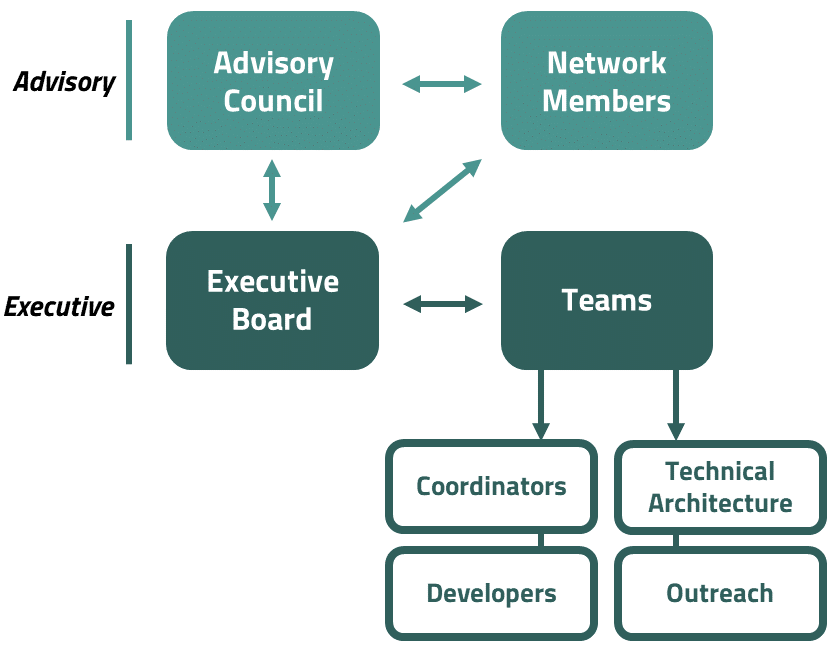
The organizational structure of SPI-Birds includes two main components:
- The advisory component includes the Advisory Council and the SPI-Birds Network Members.
- The executive component consists of the Executive Board and four Teams: Coordinators, Developers, Technical Architecture, Outreach.
Network components
-
Antica Culina
Antica’s expertise covers evolutionary ecology of bonding, life-history trade offs, evidence synthesis, and data and code standards. She strives to apply her knowledge of different modelling approaches to inform wildlife conservation decisions. She is one of the pioneers in studying and promoting Open Science practices in ecological and evolutionary research.Antica has worked on a variety of free-living animal populations, but the majority of her work has been based on long-term studies of great tits, including the project she currently leads on the stability of bonds between breeding partners. Within this project, she has initiated SPI-Birds Network and Database. She has finished undergrad degree in Ecology, worked on bird conservation projects in Croatia (NGO BIOM) before moving to the Oxford University for her PhD.
Antica acts as Scientific Advisor to Open Knowledge Maps and Go FAIR Implementation Network. More info here: https://nioo.knaw.nl/en/employees/antica-culina.
Marcel E. Visser
Marcel is the head of the Animal Ecology Department at the Netherlands Institute of Ecology (NIOO-KNAW) and he is widely recognized as a world-leading expert on the ecological and evolutionary impact of anthropogenic environmental changes. His pioneering research on how climate change disrupts natural systems used long-term studies on wild species. The work he led on how climate change leads to phenological mismatches within food chains has turned his model species, the great tit, into the poster child for climate change impact. His work on wild long-term populations is complemented with studies in aviaries, and by genomic work, among which the sequencing of the great tit genome.Marcel combines fieldwork, aviary work and molecular techniques in single projects, for instance by using genomic selection to create selection lines for timing of reproduction in great tit, and then use these lines to look at epigenetic regulation of gene expression as well as to measure fitness consequences of timing in the wild. He is managing the four long-term study populations of hole-nesting species that have ran at the NIOO from 1955 onwards.
Marcel has been awarded a NWO-VICI and an ERC Advanced grant, and has been elected as a member of the Royal Netherlands Academy of Sciences (KNAW). He is co-founder and inaugural president of the Netherlands Society for Evolutionary Biology (NLSEB). More info here: https://nioo.knaw.nl/en/employees/marcel-visser.
-
Sandra Bouwhuis
"I am an evolutionary ecologist with a specific interest in the causes and consequences of within-individual change in life-history traits and between-individual variation in life-history strategies. I mostly conduct analyses on long- term individual-based datasets collected in wild populations, and have so far had the pleasure to work on great tits (Parus major), pre- industrial humans (Homo sapiens) and common terns (Sterna hirundo)."You can find more information about Sandra's current research interests here.
Josefa Bleu
"I am an assistant professor at the University of Strasbourg in the Hubert Curien Pluridisciplinary Institute. My research lies at the interface between evolutionary ecology, behavioural ecology and eco-physiology. I am interested in the effects of the biotic and abiotic environment on the life-history traits, the physiology and phenotype of the organisms. I am working in the field (monitoring of great tits populations in and around Strasbourg) and also in the lab (model species: zebra finches)."You can find more information here.
Malcolm D. Burgess
Malcolm is a Principal Conservation Scientist at the RSPB Centre for Conservation Science, where he has mostly worked in the UK and western Africa investigating the causes of decline and migration behaviour of Afro-Palaearctic migrant birds. He has also developed frameworks for spatial conservation prioritization, and recently moved into research related to ground-nesting birds and predation. Malcolm has set up and runs PiedFly.Net, a citizen science project that coordinates hole-nestling bird and phenology monitoring at 50 sites across the UK, most in southwest England, and curates historic datasets.Malcolm is also an Honorary Research Fellow at the University of Exeter, where he conducts collaborative research centred on a 65 year hole-nesting bird dataset at East Dartmoor (UK), which he has been involved with since 1998, and took over this nest box study in 2007. This data is largely used collaboratively with research groups across Europe working on climate change, migration, population dynamics, genetics and blood parasites.
Andrey Bushuev
Anne Charmantier
Anne is an evolutionary ecologist holding a senior CNRS position (eq. Prof) in the Centre d’Ecologie Fonctionnelle et Evolutive (CEFE, Montpellier, France). Her main research interests are focused on understanding the mechanisms involved in the evolution of adaptive traits, especially in a context of rapid anthropogenic changes. Since 2007, she is managing a long-term database initiated in 1976 by Jacques Blondel, which includes data (and samples) on blue tits in Corsica and mainland France, and great tits in urban and forest areas of the South of France. This data contributes to her research on local adaptation, plasticity, senescence, ecological genomics and sexual selection. She has particularly pioneered quantitative genetic approaches in wild populations, to study adaptive and non-adaptive responses to climate change and urbanisation.Anne is a member of the scientific councils for the European Society of Evolutionary Biology (ESEB) and the Fondation pour la Recherche sur la Biodiversité (FRB), involved in the French Women & Science Society, and is an Associate Editor for Evolution Letters.
Ella Cole
Erik MatthysenErik is Professor in Evolutionary Ecology at the University of Antwerp, where he teaches courses related to ecology, behaviour, evolution and conservation, as well as ornithology. Hole-nesting birds have been the major study system throughout his career. His first projects were on territoriality and population dynamics in Eurasian Nuthatches, culminating in a PhD in 1988 as well as a monograph published in 1998.
In 1994 he took over the ongoing nestbox study on Great and Blue Tits in Belgium started by André Dhondt, with two main study areas: the Peerdsbos site (running since 1979) and the fragmented Boshoek area (since 1994). These populations have been and are still studied for questions related to dispersal, personality, habitat fragmentation, host-parasite interactions and climate change. The data have been used in many collaborative studies with colleagues all over Europe.
Other bird-related projects in the lab have dealt with conservation, sociality and population dynamics of forest birds in Kenya and Bolivia, and invasion biology of parakeets in Belgium. He has been active in the EOU and IOU as council member and scientific chair of conferences, and has participated in all seven hole-breeding passerine meetings organised since 1985.
Learn more about Erik’s work here www.uantwerpen.be/erik-matthysen
Adele Mennerat
Adele is an evolutionary ecologist with broad interests within behaviour and life history evolution. Her research mostly focuses on disease ecology and evolution in wild and domestic animal populations, in the context of a rapidly changing world. After a first period in Bergen as a researcher, she joined the EGI at Oxford University as a Marie Curie fellow. During this time she became a single carer for her children, aged one and three at the time - a challenging period. After a few years as Associate professor in Amiens, France, she joined Bergen once more, where she established in 2017 a monitored population of hole-nesting birds. She currently leads a project on anthropogenic parasite evolution, in addition to engaging in outreach, including exhibitions at the Natural History Museum in Bergen.More information on Adele’s work here: https://www.uib.no/en/persons/Adele.Mennerat
Bernt-Erik Sæther
Marta Szulkin
Marta is an urban evolutionary ecologist and associate professor at the Centre of New Technologies, University of Warsaw, Poland. She holds a PhD in Zoology from the University of Oxford, and worked at the University of Oxford as Magdalen College Research Fellow (JRF) and in Montpellier (CEFE CNRS) as Marie Curie Fellow before starting the Wild Urban Evolution & Ecology Lab at the University of Warsaw in 2015. While much of her work originally focused on long-term datasets of wild passerines in natural habitats (inbreeding in Oxford, population genomics in CEFE CNRS), she is currently mostly focusing on evolution and ecology in cities.Marta started a prospectively long-term study of wild passerines (blue tits and great tits) in a gradient of urbanisation in 2016, and is also involved in large-scale projects on the impact of urbanisation on ecological and evolutionary dynamics globally (see NSF urbanecoevo.net). She is the editor and co-author of Urban Evolutionary Biology (Szulkin, Munshi-South & Charmantier eds, Oxford University Press, 2020).
Link to website: http://leem.cent.uw.edu.pl/
-
Coordinators
Antica Culina - Antica’s expertise covers evolutionary ecology of bonding, life-history trade offs, evidence synthesis, and data and code standards. She strives to apply her knowledge of different modelling approaches to inform wildlife conservation decisions. She is one of the pioneers in studying and promoting Open Science practices in ecological and evolutionary research.Antica has worked on a variety of free-living animal populations, but the majority of her work has been based on long-term studies of great tits, including the project she currently leads on the stability of bonds between breeding partners. Within this project, she has initiated SPI-Birds Network and Database. She has finished undergrad degree in Ecology, worked on bird conservation projects in Croatia (NGO BIOM) before moving to the Oxford University for her PhD. Antica acts as Scientific Advisor to Open Knowledge Maps and Go FAIR Implementation Network. More info here: https://nioo.knaw.nl/en/employees/antica-culina.
Stefan Vriend - Stefan is a quantitative population ecologist interested in open science, data standards, and developing statistical models to study eco-evolutionary processes across space and time. Formerly a PhD student at the Centre for Biodiversity Dynamics in Trondheim, Norway, he joined the Department of Animal Ecology at NIOO-KNAW as a postdoc in 2022. Recently, he started a new position as the coordinator of the Veluwe as part of the large-scale research infrastructure LTER-LIFE, in which a consortium of scientists, data experts and software engineers will built the e-infrastructure for developing digital twins to help predict how changes in climate and other human-induced pressures affect ecosystems and biodiversity.
Joey Burant - Joey is a population ecologist and tenure-track research scientist at NIOO, where he is focussed on using long-term data on hole-nesting birds to understand how individuals and populations of wild animals respond to environmental change. His research expertise lies at the intersection of population dynamics, seasonality, and early warning signals, and spans from laboratory studies in fruit flies, to theoretical work, and field studies in birds. Previously, during his postdoc with the Living Data Project, an initiative of the Canadian Institute of Ecology and Evolution, he co-designed and delivered a series of graduate courses on topics related to open science, including data management, reproducibility, synthesis statistics, and scientific collaboration. His work at the Living Data Project included "data rescue", which involved the identification, preservation, and open sharing of valuable yet publicly-inaccessible data and associated metadata.
Developers
Stefan Vriend - At the developer team, Stefan has recently been involved in updating the standard protocol to version 2.0.0, standardising the metadata form for easier metadata entry for data contributors and handling for the SPI-Birds developers.Amélie Fargevieille - Amélie is an evolutionary behavioural ecologist interested in the effect of spatiotemporal variation on the evolution of life-history traits and phenotypes (with a focus on coloration) using long-term datasets. She was a PhD student at the Center for Functional and Evolutionary Ecology (CEFE) in Montpellier, France, working on long-term dataset on plumage coloration in blue tits, then joined Auburn University (AL, USA) as a postdoc, still working on eco-evolutionary processes with long-term data on reptiles. In 2021, she came back to CEFE in Montpellier to manage the field season and help managing and improving the associated database. Her main interest now is to work on databases, and develop tools to standardise data collection and datasets, to facilitate the management, the sharing, the archiving and hence the reproducibility of data for research in evolutionary ecology. At SPI-Birds, Amélie focusses on constructing the very first pipelines that accommodate version 2.0.0 of the standard protocol.
Liam D. Bailey - Liam is the head of developers team, and he coordinates all the activities related to converting various long-term individual based datasets into a standard format. Liam’s scientific interest lie in combining his biological knowledge and skills as a data scientist to understand the ecological impacts of climate change using long-term individual based data. In his current work, he is using agent (individual) based modelling to understand the complex social system of spotted hyenas (Crocuta crocuta).
Find out more at https://liamdbailey.com/
Design
Szymon Drobniak - Evolutionary biologist working at the Jagiellonian University in Poland and UNSW in Sydney. He specialises in quantitative genetics, behavioural ecology, research synthesis using meta-analysis and comparative studies, and biostatistics. He is also a writer and graphic designer. In his artistic work he focuses on information architecture, science illustration, and bridging gaps between art and science. See his artistic profiles here and here.Outreach
Antica Culina
Stefan VriendFormer team members
Eduardo Santos (coordinator South America)
Zuzana Zajkova (developer)
Chloé Nater (developer)
Chris Tyson (developer)
Network members
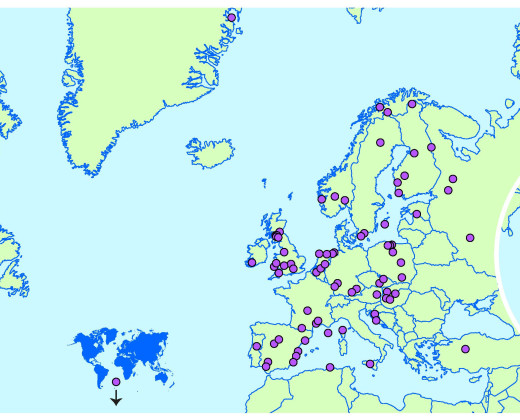
Countries indicate the location of the study sites, not the location of the data contributor's institute.
Austria
- Sabine Hille (University of Natural Resources and Life Sciences)
Belgium
- Marcel Eens (University of Antwerp)
- Erik Matthysen, Frank Adriaensen (University of Antwerp)
- Wendt Müller, Arne Iserbyt (University of Antwerp)
Canada
- Nathaniel T. Wheelwright, Patricia Jones (Bowdoin Scientific Station)
Croatia
- Sanja Barišić, Davor Ćiković, Vesna Tutiš, Jelena Kralj (Croatian Academy of Sciences and Arts, Institute of Ornithology)
Czechia
- Peter Adamík, Miroslav Král (Palacky University)
- Miloš Krist (Palacky University)
Estonia
- Raivo Mänd, Vallo Tilgar, Marko Mägi, Jaanis Lodjak (University of Tartu)
- Agu Leivits (Estonian Environmental Board)
Finland
- Tapio Eeva, Markus Ahola (University of Turku)
- Markku Orell, Seppo Rytkonen, Emma Vatka (University of Oulu)
France
- Anne Charmantier, Samuel Caro, Claire Doutrelant, Arnaud Grégoire, Marcel Lambrechts, Céline Teplitksy, Denis Réale (CEFE-CNR & UQAM)
- Alexis Chaine, Andy Russel (CNRS)
- Blandine Doligez (LBBE-CNRS)
- Olivier Gilg, Loïc Bollache (Université de Bourgogne Franche Comté)
- Sylvie Massemin, Josefa Bleu (Institut Pluridisciplinaire Hubert Curien)
Germany
- Lucy Aplin, Gustavo Alarcon-Nieto (Max Plank Institute of Animal Behavior)
- Sandra Bouwhuis (Institute of Avian Research)
- Niels Dingemanse, Alexia Mouchet (LMU Munich)
- Michael Griesser (University of Konstanz)
- Michaela Hau, Caroline Deimel (Max Planck Institute for Ornithology)
- Benedikt Holtmann (LMU Munich)
- Bart Kempenaers, Mihai Valcu (Max Planck Institute for Ornithology)
Hungary
- Gábor Seress, András Liker (University of Pannonia)
- János Török, Gergely Hegyi, Balázs Rosivall (Eötvös Loránd University)
Italy
- Camillo Cusimano, Bruno Massa, Daniela Campobello (Stazione Ornitologica)
Ireland
- John Quinn (University College Cork)
Israel
- Aya Goldshtein (Tel Aviv University)
Japan
- Teru Yuta (Yamashina Institute for Ornithology)
Latvia
- Martins Briedis, Oskars Keišs (University of Latvia)
Mexico
- Clemens Küpper, Medardo Cruz-Lopez, Luke Eberhart-Hertel (Max Planck Institute for Biological Intelligence)
Netherlands
- Christiaan Both (University of Groningen)
- Peter Korsten, Jan Komdeur (University of Groningen & Bielefeld University)
- Kees van Oers (NIOO-KNAW)
- Martijn van de Pol, Kees Oosterbeek (NIOO-KNAW/Sovon)
- Simon Verhulst (University of Groningen)
- Marcel Visser (NIOO-KNAW)
New Zealand
- Shinichi Nakagawa, Eduardo S. A. Santos, Benedikt Holtmann, Carlos E. Lara (University of Otago)
Norway
- Kjell Einar Erikstad & Tone Kristin Reiertsen, (Norwegian Institute for Nature Research)
- Adele Mennerat (University of Bergen)
- Ole Wiggo Røstad (Norwegian University of Life Sciences)
- Tore Slagsvold (Oslo University)
Poland
- Mariusz Cichoń (Jagiellonian University)
- Szymon Drobniak (Jagiellonian University)
- Anna Dubiec, Tomasz Mazgajski (Museum and Institute of Zoology, Polish Academy of Sciences)
- Wojciech Kania (Polish Academy of Sciences)
- Sonia Landowska (Ornithological Station)
- Marta Szulkin (University of Warsaw)
- Dariusz Wysocki (University of Szczecin)
Portugal
- Ana Cláudia Norte (University of Coimbra)
Russia
- Alexandr Artemyev (Karelian Research Center)
- Anvar Kerimov, Elena Ivankina, Andrey Bushuev, Tatyana Ilyina (Lomonosov Moscow State University)
- Andrey Tolstoguzov (Karelian Research Centre)
Spain
- Emilio Barba (University of Valencia)
- Eduardo Belda (Universitat Politècnica de València)
- Julli Broggi, Jordi Figuerola (Estación Biológica de Doñana, CSIC)
- Alejandro Cantarero, Juan Moreno (National Museum of Natural Sciences Madrid)
- Silvia Espín, Pablo Sánchez-Virosta, Mario León-Ortega, José Manuel Zamora-Marín , Antonio Zamora-López, Pedro Jiménez, Antonio J. García-Fernández (University of Murcia)
- Judith Morales (National Museum of Natural Sciences Madrid)
- Jaime Potti, David Canal, Jesús Martínez-Padilla, Carlos Camacho (Estación Biológica de Doñana-CSIC, Pyrenean Institute of Ecology-CSIC)
- Juan Carlos Senar (Natural Sciences Museum Barcelona)
Sweden
- Debora Arlt (SLU Swedish University of Agricultural Sciences)
- Michael Griesser (University of Konstanz, Germany)
- Caroline Isaksson (Lund University)
- Jan-Åke Nilsson (Lund University)
- Hannah Watson, Johan Nilsson (Lund University)
Türkiye
- Can Bilgin, Pinar Kavak (Middle East Technical University)
United Kingdom
- Malcolm Burgess, PiedFly.Net (University of Exeter)
- Davide Dominoni (University of Glasgow)
- Simon Evans (University of Exeter)
- Jarred Hadfield (University of Edinburgh)
- Ian Hartley, Mark Mainwaring (Lancaster University, Bangor University)
- Steffen Oppel (RSPB Centre for Conservation Science)
- Julia Schroeder, Terry Burke (Imperial College London, University of Sheffield)
- Ben Sheldon, Ella Cole (University of Oxford)
- Sue Anne Zollinger, Selvino de Kort (Manchester Metropolitan University)
United States of America
- Ian Nisbet (I. C. T. Nisbet & Company)
Research & conferences
-
PROJECTS THAT USE DATA FROM MULTIPLE BIRD POPULATIONS
1) sTraitChange – How do trait responses to climate change translate into demographic rates and population dynamics?
The project aims at developing a mechanistic framework that improves our ability to predict climate-induced changes across levels of organization, and generalizations of how species with different life-histories respond to climate change.
2) Pair bonds beyond the breeding season
In this project, Dr. Antica Culina uses data on multiple populations of great tit to study causes and consequences of divorce and pair fidelity.
3) EVOCLIM – Phenotypic selection and population demography in fluctuating environments
In this project, Stefan Vriend and Prof. Bernt-Erik Sæther use data on multiple populations of hole-nesting birds to study the role of environmental stochasticity and density dependence in phenotypic selection and population demography across Europe.
4) Why do tits (Paridae) cover their eggs before incubation? The roles of temperature, nest predators and information parasites
Dr. Olli Loukola uses data on multiple tit populations to investigate variation in great and blue tits' egg covering behaviour across different populations in Europe and variables that may explain the geographical variation.
5) Quantifying intra-specific variation in sensitivity to climate change
This project uses sliding window analyses to study how phenological sensitivity to temperature varies among European populations of great and blue tits. The project then seeks to understand how such variation may be driven by differences in the biotic and abiotic environment experienced by each population.
6) Can we use multivariate autoregressive state-space models to quantify species interactions from time series data?
In this project Dr. Emily Simmonds and Prof. Bob O’Hara use Bayesian hierarchical models, including observation error, to try and quantify the strength of competitive interactions. This work predominantly uses simulated data to test model performance, but also uses multiple populations of great tits and blue tits as a case study illustration.
7) Phenotypic variation along urban gradients
Urbanization affects the mean phenotypes of many wildlife populations, but it is not well known how urbanization affects phenotypic variation, a major driver of eco-evolutionary processes. Urbanization can affect phenotypic variation through several processes and can increase the phenotypic variation in urban populations (e.g., urban great and blue tit populations, see here). This project aims to explore how environmental factors associated with urbanization, stress, and heterogeneity impact phenotypic variation along multiple urban gradients across Europe.
-
SCIENTIFIC ARTICLES THAT USE DATA FROM MULTIPLE BIRD POPULATIONS
2021-present
- Vriend, S.J.G. et al. (2022). Temperature synchronizes temporal variation in laying dates across European hole-nesting passerines. Ecology. Read here
- Bonnet, T. et al. (2022). Genetic variance in fitness indicates rapid contemporary adaptive evolution in wild animals. Science. Read here
- Keogan, K. et al. (2022). Variation and correlation in the timing of breeding of North Atlantic seabirds across multiple scales. Journal of Animal Ecology. Read here
- Bailey, L.D. et al. (2022). Bird populations most exposed to climate change are less sensitive to climatic variation. Nature Communications. Read here
- Samplonius, J.M. et al. (2021). Strengthening the evidence base for temperature-mediated phenological asynchrony and its impacts. Nature Ecology & Evolution. Read here
2016-2020
- Culina, A. et al. (2020). Connected data landscape of long-term ecological studies: the SPI-Birds data hub. Journal of Animal Ecology. Read here
- Radchuk V et al. (2020). Adaptive responses of animals to climate change: not universal, likely insufficient. Nature Communications 10: 3109. Read here
- Møller, A.P. et al. (2020). Interaction of climate change with effects of conspecific and heterospecific density on reproduction. Oikos 129: 1807–1819.
- Loukola, O.J. et al. (2020). The roles of temperature, nest predators and information parasites for geographical variation in egg covering behaviour of tits (Paridae). Journal of Biogeography 47:1482–1493. Read here
- Norte, A.C. et al. (2020). Host dispersal shapes the population structure of a tick-borne bacterial pathogen. Molecular Ecology 29:485–501.
- Ruuskanen, S., Espín, S., Sánchez-Virosta, P., Sarraude, T., Hsu, B-Y., Pajunen, P., Costa, R.A., Eens, M., Hargitai, R., Török, J., Rokka, A., Eeva, T. (2019). Transgenerational endocrine disruption: does elemental pollution affect egg or nestling thyroid hormone levels in a wild songbird? Environmental Pollution 247: 725-735.
- Gamelon M, Vriend SJG, Engen S, Adriaensen F, Dhondt AA, Evans SR, Matthysen E, Sheldon BC, Saether B-E. (2019). Accounting for interspecific competition and age structure in demographic analyses of density dependence improves predictions of fluctuations in population size. Ecology Letters 22: 797-806. Read here
- Jones, W., K. Kulma, S. Bensch, M. Cichoń, A. Kerimov, M. Krist, T. Laaksonen, J. Moreno, P. Munclinger, F. Slater, E. Szöllősi, M.E. Visser & A. Qvarnström (2018). Interspecific transfer of parasites following a range-shift in Ficedula flycatchers. Ecology & Evolution 8: 12183–12192. Read here
- Samplonius, J.M. et al. (2018). Phenological sensitivity to climate change is higher in resident than in migrant bird populations among European cavity breeders Global Change Biology 24:3780–3790. Read here
- Møller, A. et al. (2018). Effects of interspecific coexistence on laying date and clutch size in two closely related species of hole-nesting birds. Journal of Animal Ecology 87: 1738–1748. Read here
- Vaugoyeau M. et al. (2016). Interspecific variation in the relationship between clutch size, laying date and intensity of urbanization in four species of hole-nesting birds. Ecology and Evolution 6:5907–5920. Read here
- Laine, V.N. et al. (2016). Evolutionary signals of selection on cognition from the great tit genome and methylome. Nature Communications 7:10474. Read here
- Lemoine, M. et al. (2016). Low genetic differentiation shaped by environmental factors in a passerine bird: on the potential role of partial migration in gene flow. Biological journal of the Linnean society 118, 668–685
2010-2015
- Stenseth NC, Durant JM, Fowler MS, Matthysen E, Adriaensen F, Jonzén N, Chan K-S, Liu H, De Laet J, Sheldon BC, Visser ME, Dhondt AA. (2015). Testing for effects of climate change on competitive relationships and coexistence between two bird species. Proc Roy Soc B 282: 20141958 DOI: 10.1098/rspb.2014.1958. Read here
- Ruuskanen, S., J. Morales, T. Laaksonen, J. Moreno ,R. Mateo, E. Belskii, A. Bushuev, A. Järvinen, A. Kerimov, I. Krams, C. Morosinotto, R. Mänd, M. Orell, A. Qvarnström, F. Slater, H. Siitari V. Tilgar, M.E. Visser, W. Winkel, H. Zang & T. Eeva (2014). Large-scale geographical variation in eggshell heavy metal and calcium content in a passerine bird (Ficedula hypoleuca). Environmental Science and Pollution Research 21: 3304-3317. Read here
- Møller A.P. et al. (2014). Variation in clutch size in relation to nest size in birds. Ecology and Evolution 4:3583–3595. Read here
- Møller A.P. et al. (2014). Clutch-size variation in Western Palaearctic secondary hole-nesting passerine birds in relation to nest box design. Methods in Ecology and Evolution 5:353-362. Read here
- Møller, A. et al. (2013). Assessing the effects of climate on host-parasite interactions: a comparative study of European birds and their parasites. PLoS ONE 8:e82886. Read here
- Burger, C., Belskii, E., Eeva, T., Laaksonen, T., Mägi, M., Mänd, R., Qvarnström, A., Slagsvold, T., Veen, T., Visser, M.E., Wiebe, K.L., Wiley, C., Wright, J., and Both, C. (2012). Climate change, breeding date and nestling diet: how temperature differentially affects seasonal changes in pied flycatcher diet depending on habitat variation. Journal of Animal Ecology 81:926-936. Read here
- Morales, J., S. Ruuskanen, T. Laaksonen, R. Mateo, E. Belskii, T. Eeva, A. Järvinen, A. Kerimov, E. Korpimäki, I. Krams, C. Morosinotto, R. Mänd, M. Orell, A. Qvarnström, H. Siitari, F.M. Slater, V. Tilgar, M.E. Visser, W. Winkel, H. Zang & J. Moreno (2013) Variation in eggshell traits between geographically distant populations of pied flycatchers Ficedula hypoleuca J Avian Biol 44: 111–120. Read here
- Mueller J, Korsten P, Hermannstaedter C, Feulner T, Dingemanse N, Matthysen E, van Oers K, van Overveld T, Patrick S, Quinn J, Riemenschneider M, Tinbergen J, Kempenaers B. 2013. Haplotype structure, adaptive history and associations with exporatory behavior of the DRD4 gene region in four great tit (Parus major) populations. Mol Ecol 22: 2797-2809. Read here
- Burger, C., E. Belskii, T. Eeva, T. Laaksonen, M. Mägi, R. Mänd A. Qvarnström, T. Slagsvold, T. Veen, M.E. Visser, K.L. Wiebe, C. Wiley, J. Wright & C. Both 2012 Climate change, breeding date and nestling diet: how temperature differentially affects seasonal changes in pied flycatcher diet depending on habitat variation. J Anim Ecol 81: 926–936. Read here
- Dingemanse N, Bouwman KM, van de Pol M, Van Overveld T, Patrick SC, Matthysen E, Quinn J. 2012. Variation in personality and behavioural plasticity across four populations of the great tit Parus major. J Anim Ecol 81: 116-126. Read here
- Eeva, T. et al. 2011 Geographical trends in the yolk carotenoid composition of the pied flycatcher (Ficedula hypoleuca) Oecologia 165:277–287. Read here
- Ruuskanen, S., H. Siitari, T. Eeva, E. Belskii, A. Järvinen, A. Kerimov, I. Krams, J. Moreno, C. Morosinotto, R. Mänd, E. Möstl, M. Orell, A. Qvarnström, J.-P. Salminen, F. Slater, V. Tilgar, M.E. Visser, W. Winkel, H. Zang & T. Laaksonen 2011 Geographical variation in egg mass and egg content in a Passerine bird PLoS ONE 6: e25360. Read here
- Korsten P, Mueller JC, Hermannstädter C, Bouwman KM, Dingemanse NJ, Drent PJ, Liedvogel M, Matthysen E, van Oers K, van Overveld T, Patrick SC, Quinn JL, Sheldon BC, Tinbergen JM, Kempenaers B. 2010. Association between DRD4 gene polymorphism and personality variation in great tits: a test across four wild populations. Molecular Ecology 19: 832-843. Read here
- Lambrechts, M. M et al.(2010). The design of artificial nestboxes for the study of secondary hole-nesting birds: a review of methodological inconsistencies and potential biases. Acta Ornithologica 45: 1-26.
- Van den Steen, E., Pinxten, R., Covaci, A., Carere., Eeva, T., Heeb, P., Kempenaers, B., Lifjeld, J.T., Massa, B., Norte, A.C., Orell, M., Sanz, J.J., Senar, J.C., Sorace, A., Eens, M. (2010). The use of blue tit eggs as a biomonitoring tool of organohalogenated pollutants in the European environment. Science of the Total Environment 408: 1451-1457.
Prior to 2010
- Van den Steen, E., R. Pinxten, V.L.B. Jaspers, A. Covaci, E. Barba, C. Carere, M. Cichoń, A. Dubiec, T. Eeva, P. Heeb, B. Kempenaers, J.T. Lifjeld, T. Lubjuhn, R. Mänd, B. Massa, J.Å. Nilsson, A.C. Norte, M. Orell, P. Podzemny, J. J. Sanz, J.Carlos, J.J. Soler Senar, A. Sorace, J. Török, M.E. Visser, W. Winkel & M. Eens 2009 Brominated flame retardants and organochlorines in the European environment using great tit eggs as a biomonitoring tool. Environment International 35: 310-317. Read here
- Sæther, B-E, S. Engen, V. Grøtan. W. Fiedler, E. Matthysen, M.E. Visser, J. Wright, A.P. Møller, F. Adriaensen, H. van Balen, D. Balmer, M.C. Mainwaring, R.H. McCleery, M. Pampus & W. Winkel 2007 The extended Moran effect and large-scale synchronous fluctuations in the size of great tit and blue tit populations J. Anim. Ecol. 76: 315-325. Read here
- Both C., J. J. Sanz, A. A. Artemyev, B. Blaauw, R. J. Cowie, A. J. Dekhuijzen, A. Enemar, A. Järvinen, N. E. I. Nyholm, J. Potti, P.-A. Ravussin, B. Silverin, F. M. Slater, L. V. Sokolov, M.E. Visser, W. Winkel, J. Wright & H. Zang 2006. Pied flycatchers travelling from Africa to breed in Europe: differential effects of winter and migration conditions on breeding date. Ardea 94: 511-525. Read here
- Both C., A.V. Artemyev, B. Blaauw, R.J. Cowie, A.J. Dekhuizen, T. Eeva, A. Enemar, L. Gustafsson, E.V. Ivankina, A. Järvinen, N.B. Metcalfe, N.E.I. Nyholm, J. Potti, P.-A. Ravussin, J.J. Sanz, B. Silverin, F.M. Slater, L.V. Sokolov, J. Török, W. Winkel, J. Wright, H. Zang & M.E. Visser 2004. Large-scale geographical variation confirms that climate change causes birds to lay earlier. Proc. R. Soc. Lond. 271: 1657-1662.Read here
- Saether BE, Engen S, Møller AP, Visser ME, Matthysen E, Fiedler W, Lambrechts MM, Becker P, Brommer JE, Dickinson J, du Feu C, Gehlbach FR, Merilä J, Rendell W, Thomson D, Török J. 2005. Time to extinction of bird populations. Ecology 86: 693-700.
- Saether BE, Engen S, Møller AP, Weimerskirch H, Visser ME, Fiedler W, Matthysen E, Lambrechts MM, Freckleton R, Badyaev A, Becker PH, Brommer JE, Bukacinski D, Bukacinska M, Christensen H, Dickinson J, du Feu C, Gehlbach FR, Heg D, Hötker H, Merilä J, Nielsen JT, Rendell W, Thomson D, Török J, Van Hecke P. Life history variation predicts stochastic effects on avian population dynamics. 2004. Amer. Nat. 164: 793-802. Read here
- Sæther B-E, Engen S, Møller AP, Matthysen E, Adriaensen F, Fiedler W, Leivits A, Lambrechts MM, Visser ME, Anker-Nilssen T, Both C, Dhondt AA, McCleery RH, McMeeking J, Potti J, Røstad OW and Thomson D. 2003. Climate variation and regional gradients in population dynamics of two hole nesting passerines. Proc. R.Soc. Lond. B 270: 2397-2404. Read here
- Sæther B.-E., S. Engen, A. P. Møller, E. Matthysen, F. Adriaensen, W. Fiedler, A. Leivits, M. M. Lambrechts, M.E. Visser, T. Anker-Nilssen, B. C., A. Dhondt, R. H. McCleery, J. McMeeking, J. Potti, O. W. Røstad, and D. Thomson 2003 Climate variation and regional gradients in population dynamics of two hole nesting passerines. Proc. R. Soc. Lond. B 270:2397-2404. Read here
- Visser M.E., F. Adriaensen, J.H. van Balen, J. Blondel, A.A. Dhondt, S. van Dongen, C. du Feu, E.V. Ivankina, A.B. Kerimov, J. de Laet, E. Matthysen, R. McCleery, M. Orell & D.L. Thomson 2003. Variable responses to large-scale climate change in European Parus populations. Proc. R. Soc. Lond. B. 270: 367-372. Read here
-
LIST OF HOLE NESTING BIRD CONFERENCES
2022 (6-9 Sept) Ninth International Hole-Nesting Birds Conference in Oxford (UK).
2017 (30 Oct - 2 Nov) Eighth International Hole-Nesting Birds Conference in Trondheim (Norway) – (no proceedings published – booklet meeting available). See https://www.ntnu.edu/hnb-conference/programme.
2010 (13-15 July) Sixth International Hole-Nesting Birds Conference in Oxford (UK) – (no proceedings published – program meeting availabe here).
2007 (7-12 September) Hole-using: adaptations and constraints in Bialowezia (Poland) – (no proceedings published – booklet meeting available). See http://www.hole-breeding-meeting.ap.siedlce.pl/.
2004 (1-5 October) Celebrating 50 breeding seasons in Vlieland (NL) – (no proceedings published – booklet meeting available here).
1991 (22-25 October) Environmental effects on reproductive success in hole-breeding birds in Sempach (CH) - (no proceedings published – program, abstracts and participant list).
1989 (3-8 October) NATO Advanced Research Workshop on Demographical, Physiological, Behavioural and Genetical Aspects of Population Biology of Passerine Birds in Evisa, Corsica (France) – (proceedings published as a book: Blondel, J., Gosler, A., Lebreton, J.-D. & McCleery, R. (eds.). Population Biology of Passerine Birds. An integrated Approach. NATO ASI Series G: Ecological Sciences, Vol. 24; incl participant list, information available here).
1985 Causal and evolutionary aspects of the determination of bird numbers with special reference to hole nesting birds in Wageningen (NL) - (proceedings published in 1987 in Ardea, information available here).
News
Newsletter March 2024
The new newsletter is out! In this newsletter we are excited to announce that we secured funding for developing SPI-Birds into a hub of FAIR and connected research outputs, and we are building a library of peer-reviewed code for formatting and analysing data – for which your input is crucial and much appreciated. In addition, the SPI-Birds team is growing and the next venue of the Hole-Nesting Birds Conference has been decided: Olomouc, Czechia (10-12 September 2025). Find the newsletter here: SPI-Birds Newsletter March 2024.
Newsletter April 2023
In the past period we have been working on a range of projects and developing ideas for the future of SPI-Birds. In the most recent newsletter we update you on: 1) the latest version of the standard data format, 2) the standardisation of metadata, and 3) past and ongoing grant applications. Find the newsletter here: SPI-Birds Newsletter April 2023.
SPI-Birds flyer
As part of the metadata standardisation procedure we have developed an online form that makes it easier for people interested in joining the SPI-Birds Network to contribute metadata and/or data of their field studies. To reach a new wave of researchers and bird enthusiasts, particularly from geographical areas and studying bird species that are currently underrepresented in the Network, we have created a promotion flyer.

Contact
Do you have questions about SPI-Birds? Do you want to request data? Please contact us at spibirds@nioo.knaw.nl.
If you wish to request data, please include:
- a list of desired study sites and species
- a description of the purpose of the data request